What to wear on deck for a Reykjavik northern lights cruise
A northern lights cruise from Reykjavik means two hours or more on a dark deck, in a sea wind that turns a mild evening raw. What you wear decides whether you stay at the rail when the sky lights up or retreat to the saloon. This guide covers the layers to bring and what each boat lends you.
Milder air than you expect, sharper wind
Reykjavik in winter is gentler than its latitude suggests. Daytime temperatures often sit around 0 °C (32 °F), thanks to the sea around Iceland, and the nights usually run a few degrees colder.
The number on your weather app tells only half the story on a boat. Once you are moving across Faxaflói Bay, the wind over an open deck can make a mild night feel far below freezing within minutes.
You also stand still for long stretches. Watching for the aurora means waiting at the rail, sometimes for half an hour at a time, and a body that is not moving cools down much faster than one walking through town.
Layers from the skin out
Dress the way you would for a winter hike, in layers you can open or add. A thin base layer of wool or synthetic fabric keeps sweat off your skin, which matters when you move between a heated saloon and a cold deck.
Over that goes a warm middle layer such as a fleece or a wool sweater. Cotton is a poor choice for either layer. It holds moisture and then chills you once you step back outside.
On top goes a windproof and waterproof jacket with a hood. Spray off the bow and the odd shower blow across the deck, and a shell that stops the wind does more than an extra sweater underneath it.
Do not forget your legs. Thermal leggings under your trousers, or ski trousers over them, make a big difference when you spend an hour on a platform with the wind coming straight off the water.
Cover your head and hands
Much of your warmth escapes from the parts you leave bare. A wool hat that covers your ears is the most useful thing in your bag. A buff or neck gaiter you can pull up over your chin comes a close second.
Bring two pairs of gloves if you plan to take pictures. Thin liner gloves let you work a phone screen or camera buttons. Thick gloves or mittens go over them while you wait for the sky to change.
Hand warmers are a cheap extra that few people regret. Slip one into each pocket before you board, and they stay warm for the whole of a two-hour cruise.
Boots with grip for an icy pier
The walk to the boat can be the most slippery part of the evening. Piers at the Old Harbour are often wet or icy after dark. A gangway or a deck can be slick as well.
Wear insulated, waterproof boots with a deep tread rather than city trainers. Thick wool socks keep your feet warm on a cold metal deck. Our guide to finding your boat at the Old Harbour covers the walk itself.
Some visitors pack slip-on ice cleats for the icy streets of town. They help on the pier, but metal studs can slide on a smooth painted deck, so carry them in a pocket and pull them off before you step aboard.
What the boats lend you, and what they don't
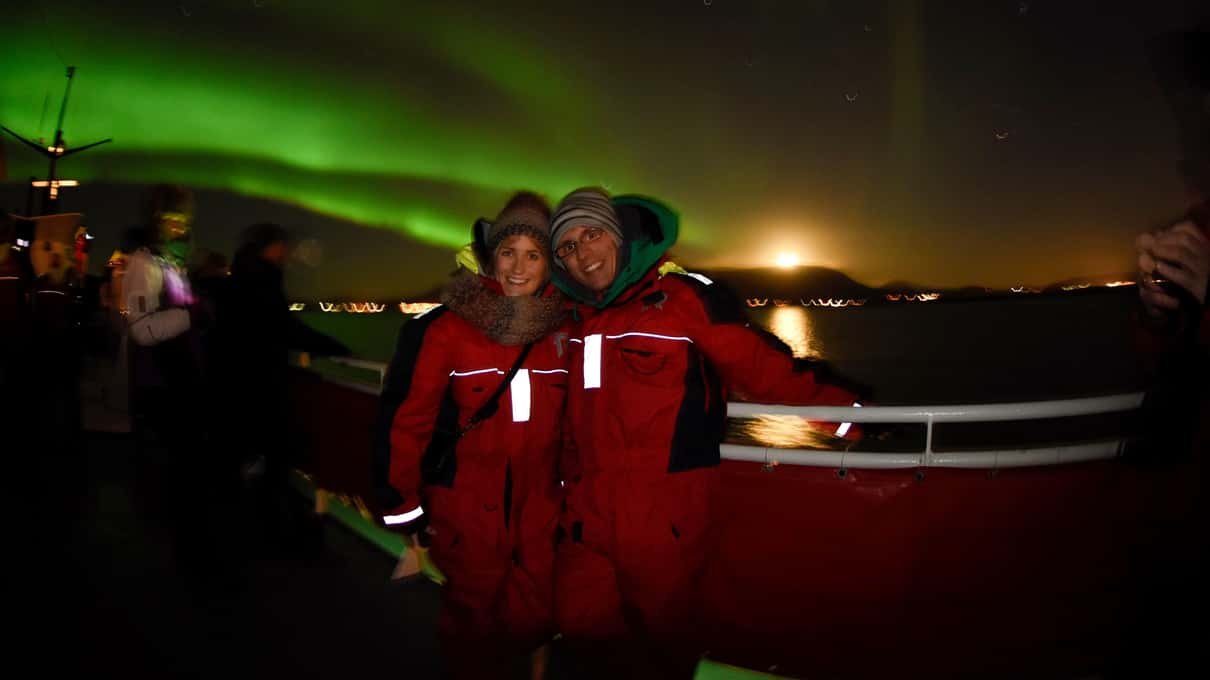
The five tours on this site differ a lot in what they hand out. Elding's northern lights cruise from ~$105 lends warm overalls and raincoats, with blankets on board too. The overalls go over your own clothes and cut the wind from your neck to your ankles.
Reykjavik Sailors lends warm flotation overalls on its whale and northern lights combo from ~$194. That matters even more on a long day, since you spend about six hours on the water across the two trips.
The Sea Trips boats and Harpa Yachts give out blankets only. A blanket is pleasant around your shoulders on a bench, but it is awkward at the rail and slips off in the wind once you hold up a phone.
On the Sea Trips yacht from ~$103 and the company's sightseeing cruise, your own clothes do all the work. The same goes for Harpa Yachts from ~$93, so dress as if no extra layer will be offered.
Overalls on the hook, a warm saloon below
Elding sails from Ægisgarður 5c for about 2–2.5 hours, from ~$105. It lends overalls and raincoats and has a heated saloon with toilets. Viator shows 4.5 from 600+ reviews, and a dark night earns a free second try.
Indoor space is the other half of staying warm. Every boat here has seating inside where you can thaw out between spells on deck, and our comparison of small yachts and bigger boats sets the decks and lounges side by side.
Phones and batteries in the cold
Cold drains batteries far faster than most people expect. A phone that shows 60 percent at the pier can switch itself off on deck within the hour, often right when the sky turns green.
Keep your phone in an inside pocket close to your body and take it out only to shoot. A small power bank in the same pocket lets you top up in the saloon, and camera owners should carry a spare battery or two.
Touchscreen gloves help, though many stop working once your fingers get cold. The liner and mitten pairing above lets you shoot in thin gloves and warm up quickly. Our tips for aurora photos from a boat go through the camera settings.
A packing list for the evening
- Thermal base layer for top and bottom
- Fleece or wool sweater
- Windproof, waterproof jacket with a hood
- Warm trousers or ski trousers
- Insulated boots with grip and thick wool socks
- Wool hat that covers the ears
- Buff or neck gaiter
- Liner gloves plus warm gloves or mittens
- Hand warmers for your pockets
- Power bank and a charging cable
- A card for hot drinks and snacks on board
Pack it all in a small bag you can carry on your back. Your hands stay free for the gangway rail, and you have somewhere to stash a layer when the saloon gets warm.
Dressing for the rest of the night
The cruise ends late, and the walk back through town feels colder than the walk out. Keep your layers on until you reach your hotel or a taxi rather than packing them away in the warm saloon.
The aurora is never guaranteed, and if cloud hides the sky, most of these boats offer a second try on another night. You will need the same kit again. Dry your gloves and socks before the next evening.
Our guide to what happens when the aurora stays hidden lists each company's rule. For the months when the weather tends to be kinder, see the best time for a cruise.